


Buffet Operations Are About More Than Taking Fewer Orders
At a traditional restaurant, the check is usually built around the items a table orders. At a buffet, the front counter often needs to answer a different set of questions: How many guests are in the party? Which price applies to each guest? How can the final check be completed accurately and efficiently?
Adults, children, lunch, dinner, weekdays, and weekends may follow different pricing rules. A single check often includes two or more guests. When employees have to calculate every situation manually, confirming the correct guest count and price can become unnecessarily complicated.
This buffet restaurant uses Front POS to manage dine-in transactions across multiple checkout stations. The important part of the setup is not any individual device. It is the way guest counts, applicable prices, and payments can follow a clearer and more consistent process
One Check May Include Several Pricing Conditions
Traditional restaurants generally calculate a check from ordered menu items. Buffet restaurants are more likely to build it around the number of guests and the price that applies to each person.
The cashier first confirms the party size, selects the applicable guest type and meal period, and then moves to payment. If the restaurant offers child pricing, different meal-period prices, or other pricing categories, the items in the POS should reflect the restaurant’s actual rules.
Employees can then follow the same steps for each transaction instead of repeatedly calculating prices from memory. The purpose is not to make pricing more complicated. It is to turn pricing rules that once existed mainly in employees’ heads into a repeatable checkout process.
Multiple Checkout Stations, One Consistent Process
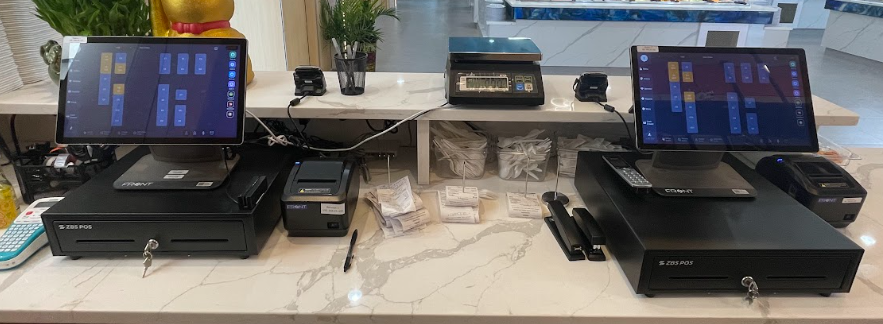
This restaurant has several front-counter checkout stations to support a large dine-in operation. Regardless of which station a guest uses, employees can work from the same items and pricing structure.
For a buffet, adding more registers is only part of the solution. The larger operational question is whether different employees and checkout points apply the same process. A unified system reduces the need for each cashier to memorize and enter pricing differently, while giving management one place to review transaction activity.
Back-office data from August and September shows that the restaurant served a five-figure number of diners in each reporting period. Each transaction represented slightly more than two guests on average, confirming that group checks are part of the restaurant’s everyday workflow rather than an occasional exception.
Let Guests Review the Check Before Paying
At buffet checkout, guests usually want to confirm two things: Was the party size entered correctly, and was the correct price selected?
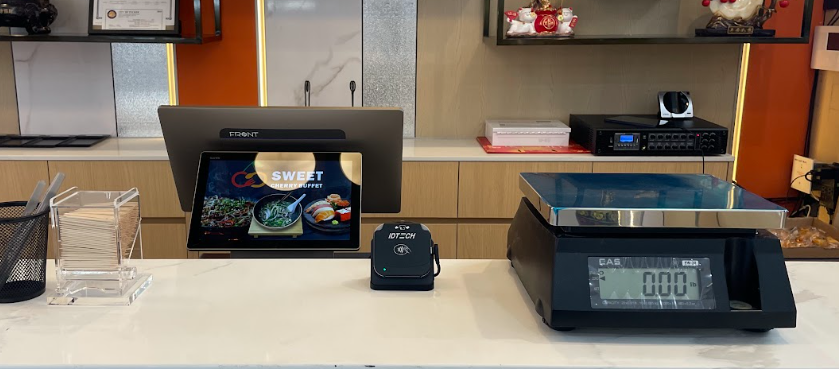
A customer-facing display allows the guest to review the current check before payment. This simple step is especially useful for group transactions. Both the cashier and the guest can see the check before it is finalized, making guest-count and pricing questions easier to address at the counter.
Weight-Based Charges Can Join the Same Checkout Flow
The restaurant’s system also includes an interface for a scale. If the restaurant has items that are genuinely sold by weight, weight information can work with the POS checkout process instead of relying entirely on manual entry.
The specific products and pricing method still depend on the restaurant’s actual operation. The equipment setup simply shows that the restaurant has prepared for a checkout scenario beyond standard per-person buffet pricing.
When Dine-In Is the Core Business, Build Around Dine-In
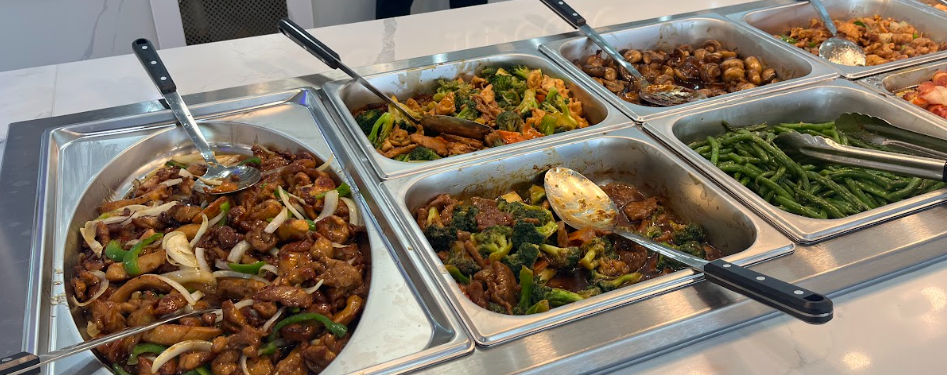
The restaurant recorded no online or third-party delivery orders in the August and September reports. Its business during these periods was centered on guests dining inside the restaurant.
That makes the case study more focused, not less valuable. Not every restaurant needs to activate every available feature at the same time. For this buffet, managing guest counts, multiple checkout points, and in-store payments is more important than adding digital channels that are not central to its current business.
A restaurant system should not be judged only by how many features it lists. It should be judged by how well it supports the workflows the restaurant uses every day.
See the Restaurant Through Checkout Data
When all front-counter stations operate within the same system, management can review transactions, diner counts, average spending per guest, and average check value from one back office.
For a buffet operator, these records can help answer practical questions:
- How many guests are typically included in one transaction?
- How does the pace of arrivals and checkout change throughout the day?
- Are average spending per guest and average check value remaining stable?
- Are records from multiple checkout stations available in one place?
- Is the restaurant still primarily driven by dine-in business?
The system does not make every business decision for the owner. It provides a consistent set of records on which those decisions can be based.
What Should a Buffet Restaurant Look for in a POS?
When evaluating a POS, buffet operators should consider whether it can support the restaurant’s actual checkout rules:
- Can the restaurant configure the guest types and meal-period prices it truly uses?
- Are multi-guest checks easy to enter and review?
- Can multiple checkout stations use the same items and prices?
- Can guests review the check before payment?
- If the restaurant sells items by weight, can that process connect to checkout?
- Can management review transactions and diner counts in one place?
For a large buffet, a consistent checkout process may be more valuable than adding more ordering features. When the guest count, applicable price, and final check are clear, the front counter is better prepared to handle a high volume of dine-in transactions.
Conclusion
Buffet operations are not about recording every item a guest places on a plate. They are about accurately managing guest counts, pricing, and payment.
With multiple checkout stations, consistent pricing items, customer-facing check review, and centralized reporting, Front POS gives this restaurant a checkout foundation designed around dine-in buffet service.
When even a multi-guest check can follow the same clear steps, pricing rules no longer depend entirely on employee memory. They become a process that is easier to apply, review, and manage.