


The Restaurant Industry in 2025 Is Facing a True Test of Extremes.
On one side, restaurants are achieving record-high efficiency through upgraded restaurant operating systems. On the other, operators are facing mounting challenges: labor costs have climbed to 22.2% of revenue, business dining orders have dropped by 40%, and aggressive price competition from third-party delivery platforms continues to squeeze already thin profit margins.
When California's new labor regulations took effect, the owner of a roast duck restaurant in Los Angeles calculated that each full-time employee would cost an additional $2,500 per month. Meanwhile, delivery platforms keep pushing prices lower, leaving profits razor-thin.
The good news is that many of these challenges can be addressed through smarter technology. FRONT's five latest feature updates, released in October, were designed specifically to help restaurants improve efficiency, control costs, and strengthen operations. Restaurants such as Atami and Noodle House have already put these tools into practice and seen measurable results.
Today, we'll take a practical look at how these features are helping restaurants navigate today's increasingly challenging business environment.
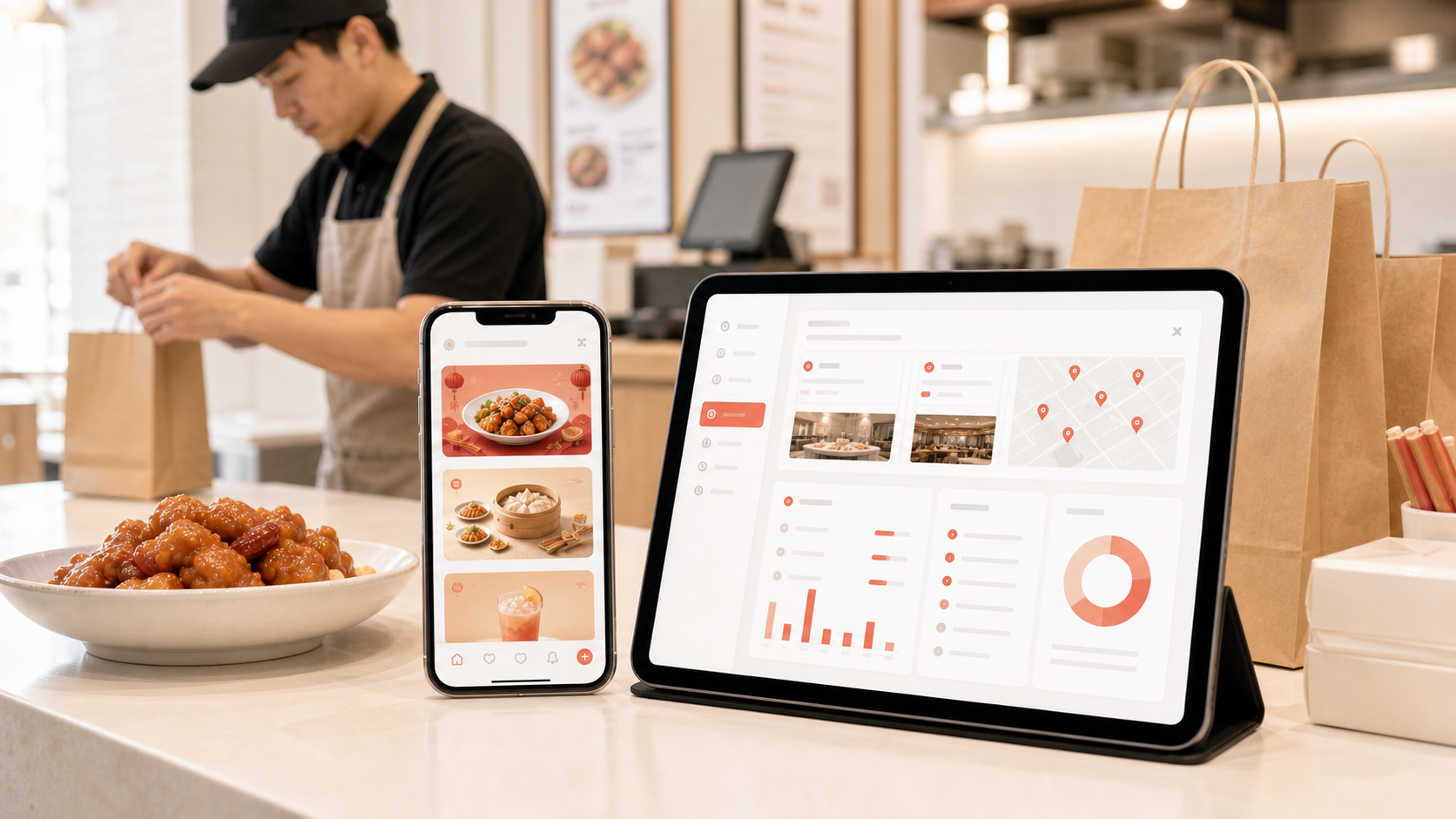

Strategy #1: Increase Efficiency and Reduce Costs by Solving Staff Frustrations and Order Errors
According to the National Restaurant Association, labor costs accounted for an average of 24% of restaurant revenue in 2024. For many Chinese restaurant owners, the challenge goes beyond rising payroll expenses. Different expectations from English- and Chinese-speaking customers, combined with frequent order and kitchen communication errors, create daily operational headaches.
FRONT's latest feature updates were designed to address exactly these pain points—helping restaurants streamline communication, improve accuracy, and reduce costly operational inefficiencies.
Happier Employees, Stronger Performance
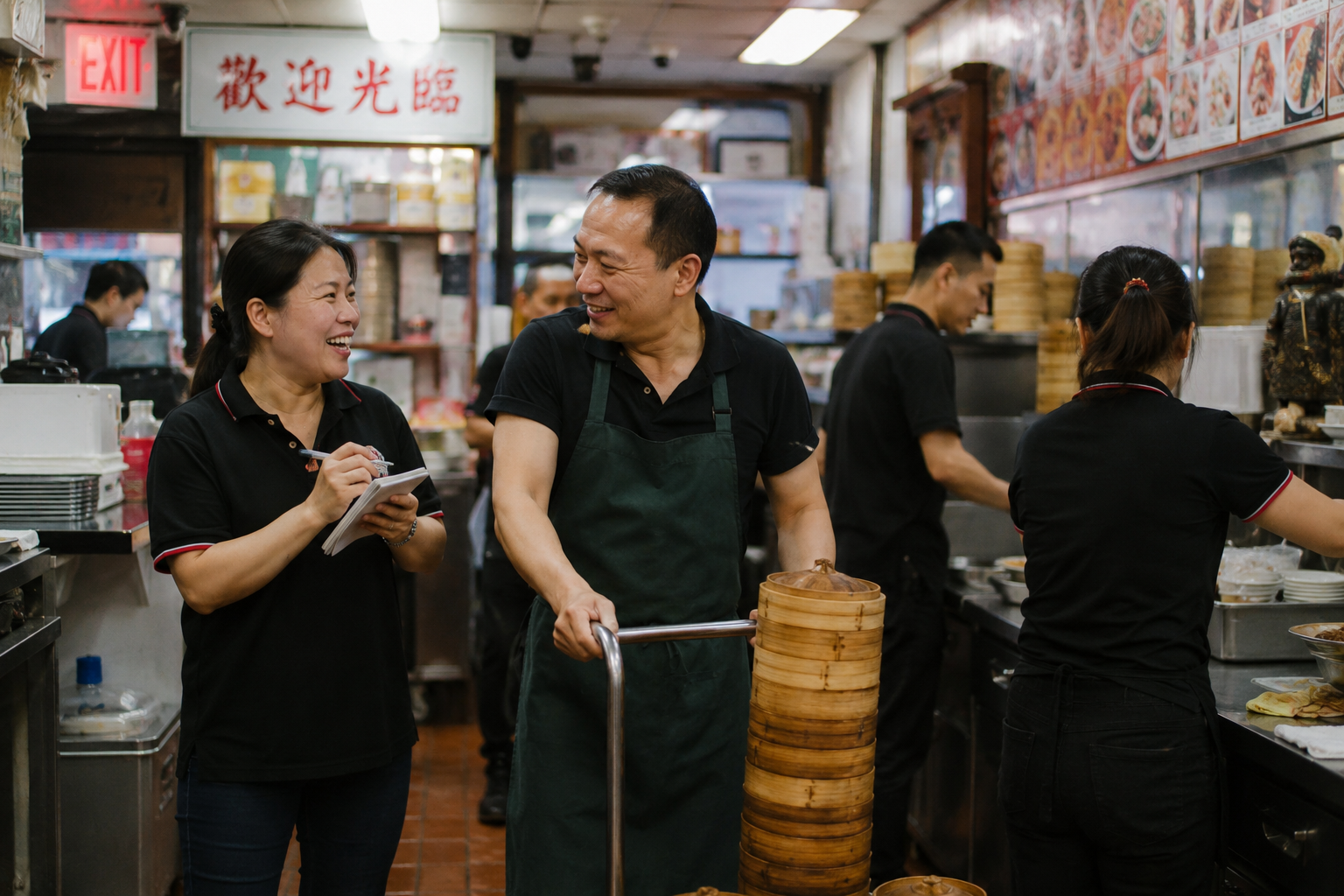
A Cantonese-style café in New York's Chinatown once struggled with tip-sharing disputes. Servers complained that the tips they earned from bringing in customers had to be shared equally with the kitchen staff. Meanwhile, dim sum chefs who spent hours preparing more than 200 baskets during a shift became frustrated when they received the same compensation as food runners who had lighter workloads. As a result, employee turnover reached 15%.
FRONT's Position + Hours-Based Distribution feature completely transformed the situation by creating a fairer and more transparent compensation structure, helping reduce workplace tension and improve staff retention.
Clearer Tickets and Kitchen Time Tracking: Fewer Errors, Faster Table Turnover
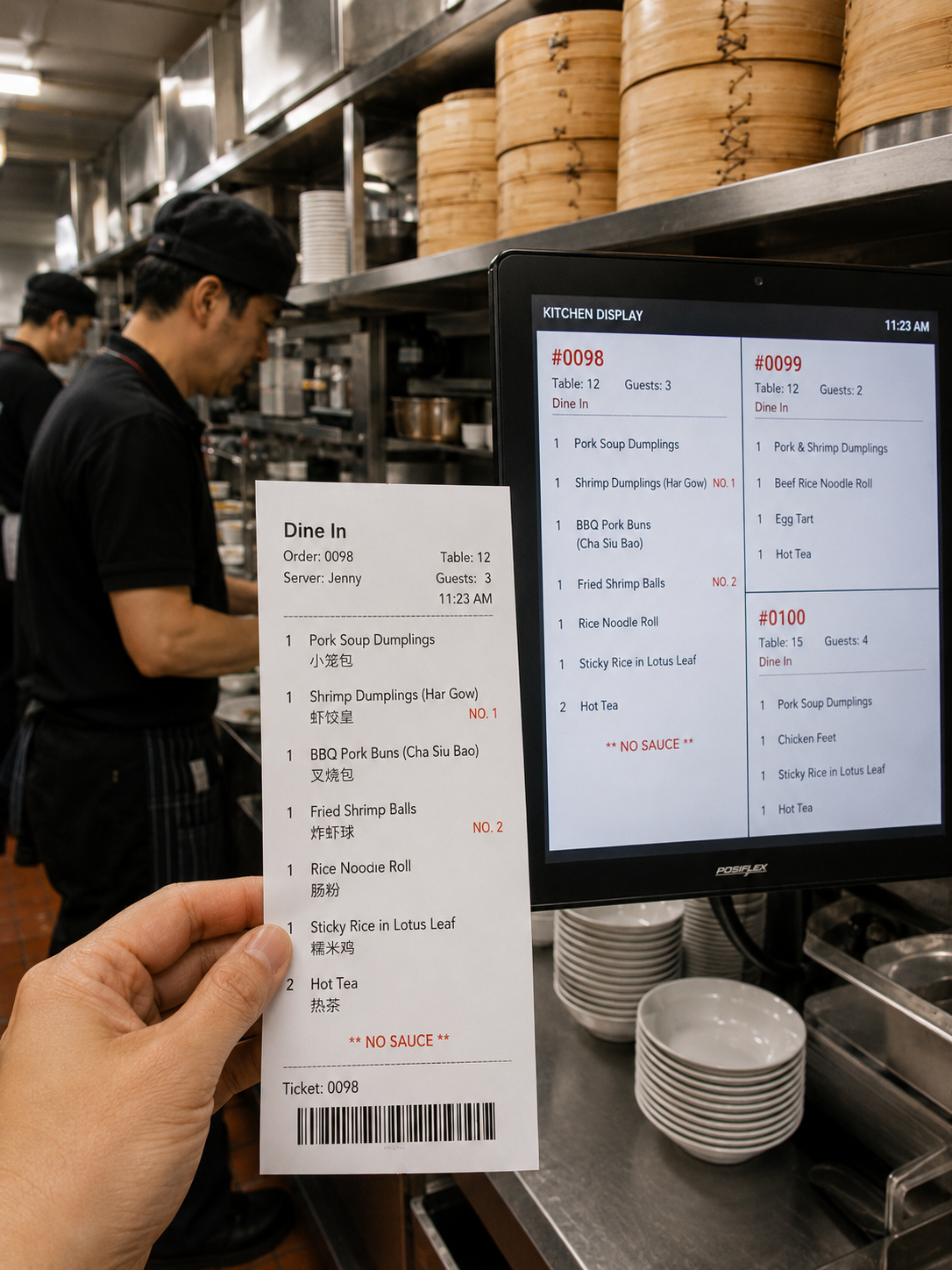
Order mistakes are one of the most overlooked sources of operational loss. One restaurant experienced an 8% order error rate after dishes such as shrimp dumplings and fried shrimp balls were mistakenly served to the wrong customers. When appetizers and combo meals appeared on the same ticket, missing sauces, incorrect flavor selections, and other fulfillment errors became common occurrences.
The situation changed after the restaurant implemented FRONT's ticket separator printing feature. By clearly separating order items on kitchen tickets and displaying preparation timestamps in real time, staff could process orders more accurately and efficiently. The result was fewer mistakes, smoother kitchen operations, and faster table turnover.
Tips/Bonuses by Position
During dim sum service, tips can be distributed as follows: Dim Sum Chef 35%, Server 30%, Food Runner 25%, BBQ Chef 10%. During lunch and dinner, the BBQ Chef's share can be increased to 30% based on workload.
The system also allocates earnings by hours worked. For example, two full-time chefs (8 hours each) and one part-time chef (4 hours) receive shares proportionate to their working hours.
After one month, employee complaints dropped by 80%, chefs arrived earlier, and servers became more motivated to upsell.
KDS Order Timing Reduces Order Status Inquiries
OMI Ramen used to struggle with frequent complaints caused by disorganized kitchen workflows. After upgrading, overdue orders were automatically highlighted, allowing servers to provide accurate wait times to customers.
As a result, order-status inquiries dropped by 70%, while Google Reviews mentioning "reasonable wait times" increased from 45% to 82%. Food quality and serving temperatures also improved.
Atami Grill & Sushi Saw Strong Results with the Same Approach
Atami Grill & Sushi recently adopted the same model. FRONT manages employee time tracking and order handling, while bonuses are tied to order volume, customer reviews, and hours worked.
Despite rising labor costs, employee retention improved by 40%, service speed in the Hibachi section increased, and Google Reviews mentioning efficient service rose by 30%.
Strategy #2: Increase Revenue by Turning First-Time Guests into Repeat Customers
OMI Ramen once struggled with frequent order-status complaints due to disorganized kitchen workflows. After upgrading, overdue orders were automatically highlighted, allowing servers to provide accurate wait times.
As a result, order-status inquiries dropped by 70%, while Google Reviews mentioning reasonable wait times increased from 45% to 82%. Food quality and serving temperatures also improved significantly.
MMS Marketing: 4× Higher Conversion Rates
Text-only marketing messages often generate very low engagement. When a New York café promoted its Chinese New Year feast, only 2 out of 100 customers responded. After switching to FRONT MMS campaigns with images, results improved dramatically.
The restaurant sent Chinese customers a photo of the feast with a free lucky candy offer, while American customers received a fried chicken promotion with 15% off and a complimentary fortune cookie, along with a direct ordering link. Conversion rates increased from 2% to 8%, resulting in 300 feast orders and a doubling of Thanksgiving fried chicken sales.
Noodle House saw similar success. During its grand opening, text-only promotions achieved a 2.5% conversion rate. After switching to FRONT MMS campaigns featuring beef noodle photos, bilingual offers, and a QR code ordering link, conversions jumped to 9%, bringing in 300+ new customers in the first month.
Atami also used animated teppanyaki visuals to promote its Hibachi combo meals, increasing sales by 50%.
Manage Multiple Locations with the Owner App
Expanding to multiple locations often creates management challenges. Part-time employees may need to be re-registered when working at different stores, while overly broad manager permissions can increase the risk of sensitive information leaks. A New York café encountered these issues when opening its Manhattan location, but FRONT's permission management features helped solve them.
Employees can be linked to a single staff ID for seamless access across locations, improving cross-store support efficiency by 50%. Permissions can also be customized by location, allowing managers to view only the data relevant to their own store, while owners maintain full visibility and can adjust strategies remotely.
Noodle House used FRONT's permission settings while preparing its second location. The first store was granted access to neighborhood customer data, while the new location was set up with permissions tailored to its business district audience. With remote oversight and secure access controls, operational preparation efficiency improved by 40%, with no risk of recipe or data leakage.
Conclusion: 3 Things Chinese Restaurants Should Focus on in Their Digital Transformation
FRONT's five feature updates are effective because they focus on the three fundamentals of restaurant operations: people, efficiency, and customer experience. Restaurant owners don't need overly complicated solutions—focusing on these three areas can make the biggest difference.
It all comes down to three key things.
For employees: Fair distribution improves retention and helps offset labor costs.
For customers: A seamless experience drives repeat business and helps avoid price wars.
For customers: A seamless experience drives repeat business and helps avoid price wars.
Baogogo reduced order errors, OMI earned more positive reviews, and Noodle House attracted new customers. These success stories prove that great food alone is no longer enough. By using FRONT to manage staff more effectively, improve operational efficiency, and enhance the customer experience, Chinese restaurants can build a stronger business and increase profitability.