


Order-Based AYCE Requires More Order Management
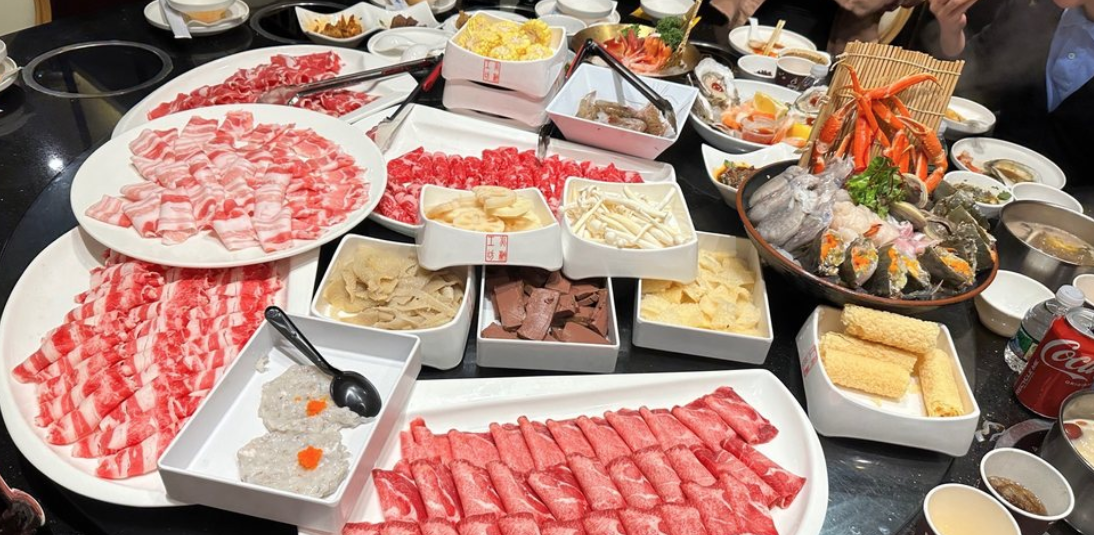
This restaurant does not use a traditional self-serve buffet model. After being seated, guests place multiple rounds of orders, which are then prepared and delivered by the restaurant.
The model reduces trips to a buffet line, but it creates a longer and more detailed ordering process. A single table may continue adding meats, vegetables, noodles, and beverages at different times. The restaurant must manage the table, party size, pricing rules, and every new ordering round while ensuring that each item reaches the correct preparation area.
One Main Station Connected to Multiple Service Points
The restaurant’s Front setup includes one main POS terminal, a customer display, eight tablets, and eight thermal printers.
The main terminal centralizes table, order, and payment management. The tablets provide greater flexibility when employees handle initial orders and additional rounds, while the printers support order communication between the front of house, service areas, and kitchen.
At checkout, the customer display presents transaction information for review. Clear payment details are especially valuable for larger groups and restaurants with a higher average check.
Guest Spending Increased as Business Volume Expanded
From August to September, the restaurant recorded a clear increase in both transaction volume and guest traffic. At the same time, its key spending indicators also improved:
- Average order value increased by approximately 5%;
- Average spend per guest increased by approximately 6%.
The restaurant served more guests without weakening its per-table or per-person spending performance. That matters more than order volume alone because it shows that growth did not come at the expense of transaction quality.
The average number of diners per order remained close to 3.5 during both reporting periods, with less than
1% variation. This also reflects the restaurant’s consistent role as a group-dining destination.
Every New Round Must Stay With the Correct Table
The key challenge for order-based AYCE hot pot is keeping the initial order and every additional round organized. Employees must confirm the table, party size, and current dining stage before assigning new items to the correct order.
With Front POS, the restaurant can continue managing table and order information within one system. Whether guests are placing their first order, adding another round, or preparing to check out, employees can work from the same table record and reduce confusion between ordering rounds.
Eight tablets and eight printers give the restaurant the hardware foundation for multiple ordering and printing points. Employees do not have to route every action through a single front-counter terminal, while new orders can continue moving toward the appropriate preparation areas.
What an Order-Based AYCE Hot Pot Restaurant Needs From Its POS
A POS system for this restaurant model should support the entire dining cycle:
- Record the correct table and party size when guests are seated;
- Keep the first order and later rounds under the correct table;
- Allow employees to enter new orders from multiple tablets;
- Send new items to the appropriate preparation areas;
- Combine the complete table balance and any additional charges at checkout.
The restaurant’s two-month performance shows that when the technology setup matches a multi-round ordering workflow, an AYCE hot pot restaurant can support more business while maintaining healthy guest-spending levels.
From seating and the first order to additional rounds and final payment, Front POS helps order-based AYCE hot pot restaurants keep every table organized.