


An Established Restaurant Needs More Than a Payment System
For a busy Chinese restaurant managing both dine-in and direct online business, the challenge is not limited to one part of the operation. Customer ordering, front-of-house confirmation, kitchen preparation, food delivery, and checkout all need to stay connected.
This Boston restaurant serves dine-in guests while also processing orders through its direct online channel. With a broad menu and dishes moving through the kitchen at different speeds, disconnected systems can force employees to spend more time confirming orders and coordinating food delivery.
The restaurant uses Front POS to connect its service terminals, kiosk, kitchen printing, and food-delivery robot, creating a clearer path from order placement to the dining table.
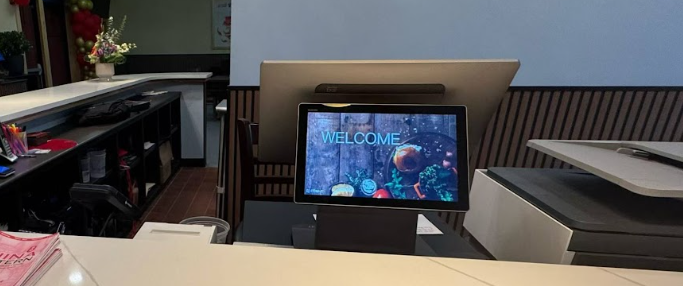
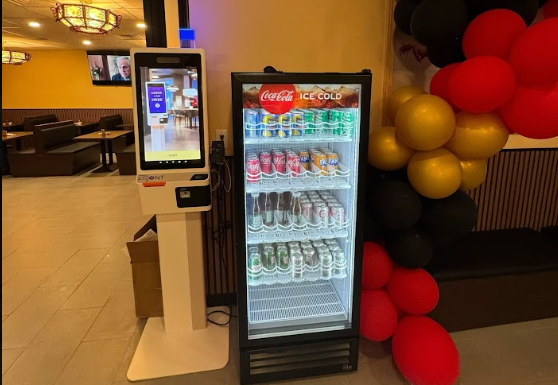
Multiple Ordering Points, One Order Workflow
The restaurant’s setup includes a Front Kiosk, multiple Front terminals, a customer display, and five thermal printers.
Guests can use the ordering options provided by the restaurant, while employees can process dine-in orders from different service points. Once an order enters the system, it can be routed to the appropriate preparation area based on the restaurant’s configuration.
Whether an order begins at the counter or the kiosk, it continues through the same management workflow. Multiple printers also support clearer communication between service and preparation areas, reducing reliance on handwritten tickets or repeated verbal confirmation.
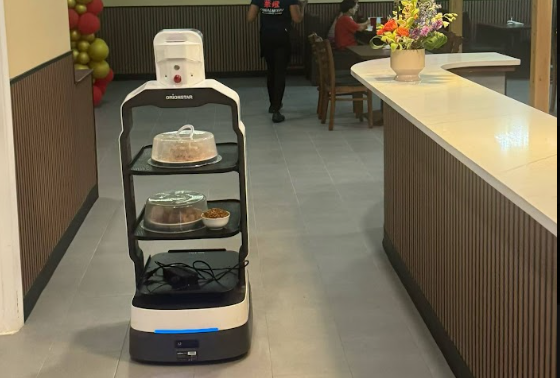
A Robot Handles Part of the Repetitive Delivery Route
After dishes are prepared, the food-delivery robot can handle part of the repetitive movement between the pickup area and dining tables. Employees load completed dishes onto the robot, select the destination, and the robot follows the restaurant’s configured route to the designated service area.
The robot does not replace hospitality. It reduces repeated walking so employees can focus more attention on greeting guests, confirming orders, responding to requests, and providing table service.
For a larger Chinese restaurant serving dishes in multiple rounds, this division of work helps create a clearer connection between the kitchen and the dining room.
Daily Valid Direct Online Orders Increased by Approximately 22%
Comparing the full month of August with September data through the 28th, the restaurant’s direct online ordering channel showed steady improvement:
- Average daily valid online orders increased by approximately 22%;
- Average daily direct online sales increased by approximately 7%;
- Average website visit duration increased by approximately 14%;
- Valid-order rates remained above 98% during both reporting periods.
Average spend per dine-in guest also increased by approximately
8%. The restaurant continued serving its in-store customers while strengthening its direct digital ordering channel.
Connected Operations Matter More Than Any Single Device
The restaurant does not rely on one piece of hardware. It uses a connected operating setup:
- Front Station and other terminals manage dine-in orders and checkout;
- The kiosk adds another in-store ordering option;
- Printers send orders to the appropriate preparation areas;
- The delivery robot handles part of the repetitive food transport;
- Back-office reporting brings in-store and direct online performance together.
When these tools share the same order information, employees spend less time switching between systems, and managers gain a clearer view of where orders originate and how each channel performs.
Mature Chinese Restaurants Should Prioritize System Completeness
For an established Chinese restaurant, a POS system should do more than accept orders and payments. It should connect ordering channels, kitchen communication, service equipment, and performance reporting.
This restaurant’s two-month results show how a more connected workflow can support dine-in operations while helping the restaurant expand its direct online ordering channel.
From customer ordering and kitchen preparation to robotic food delivery, Front POS helps established Chinese restaurants connect every stage of service.